














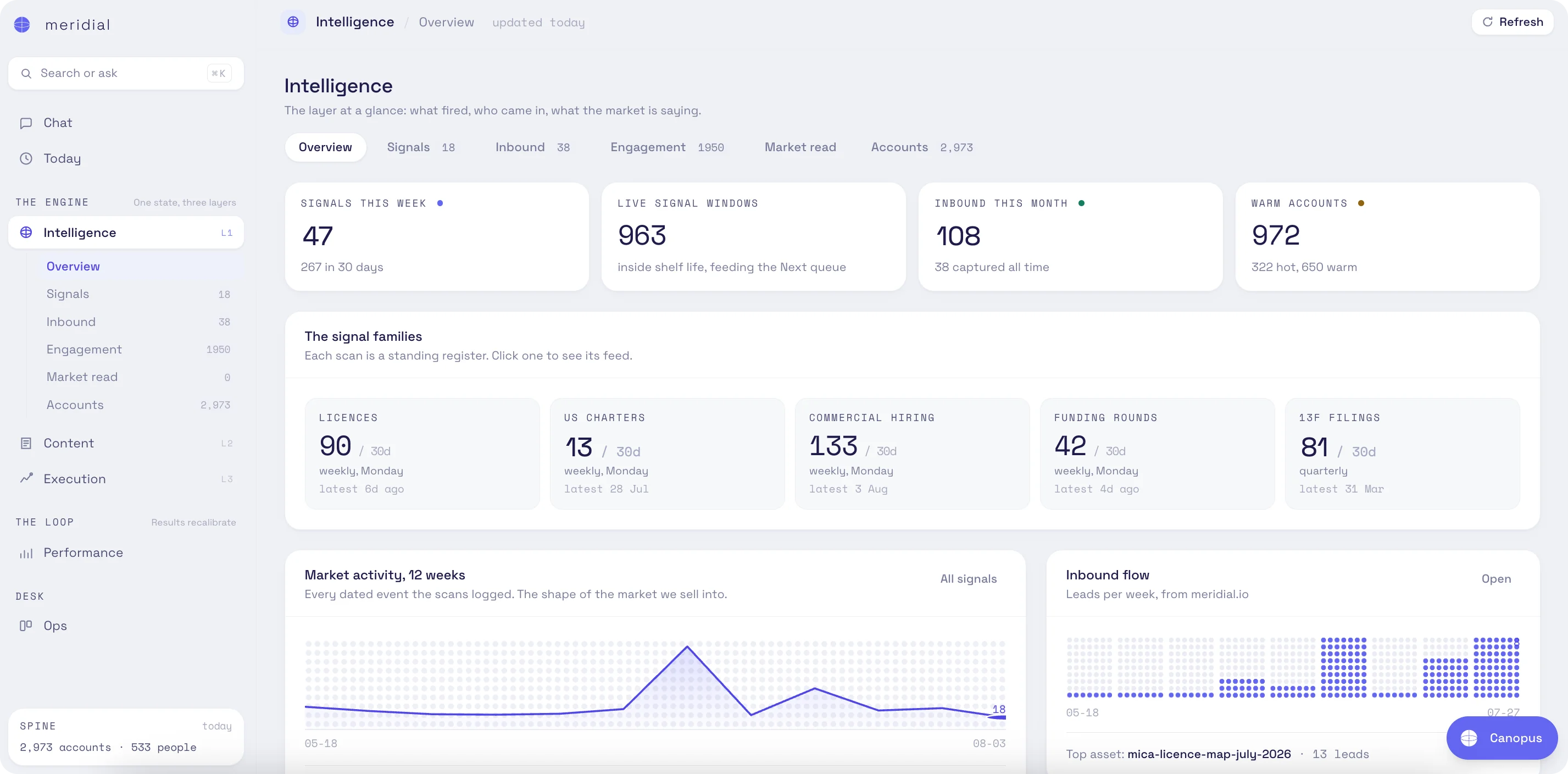
Earn inbound. Arm outbound. Be the name they trust.
Directed by intelligence, built from your own expertise, aimed at the buyers the map found. Content is not a side activity here. It is the flywheel that feeds both execution channels.
Two things broke at once. Cold outbound stopped working on volume, and answer engines became the first touchpoint, so buyers now ask Claude, ChatGPT and Perplexity before they open Google. Content answers both failures with one asset library, and that library is the thing a competitor cannot assemble overnight.






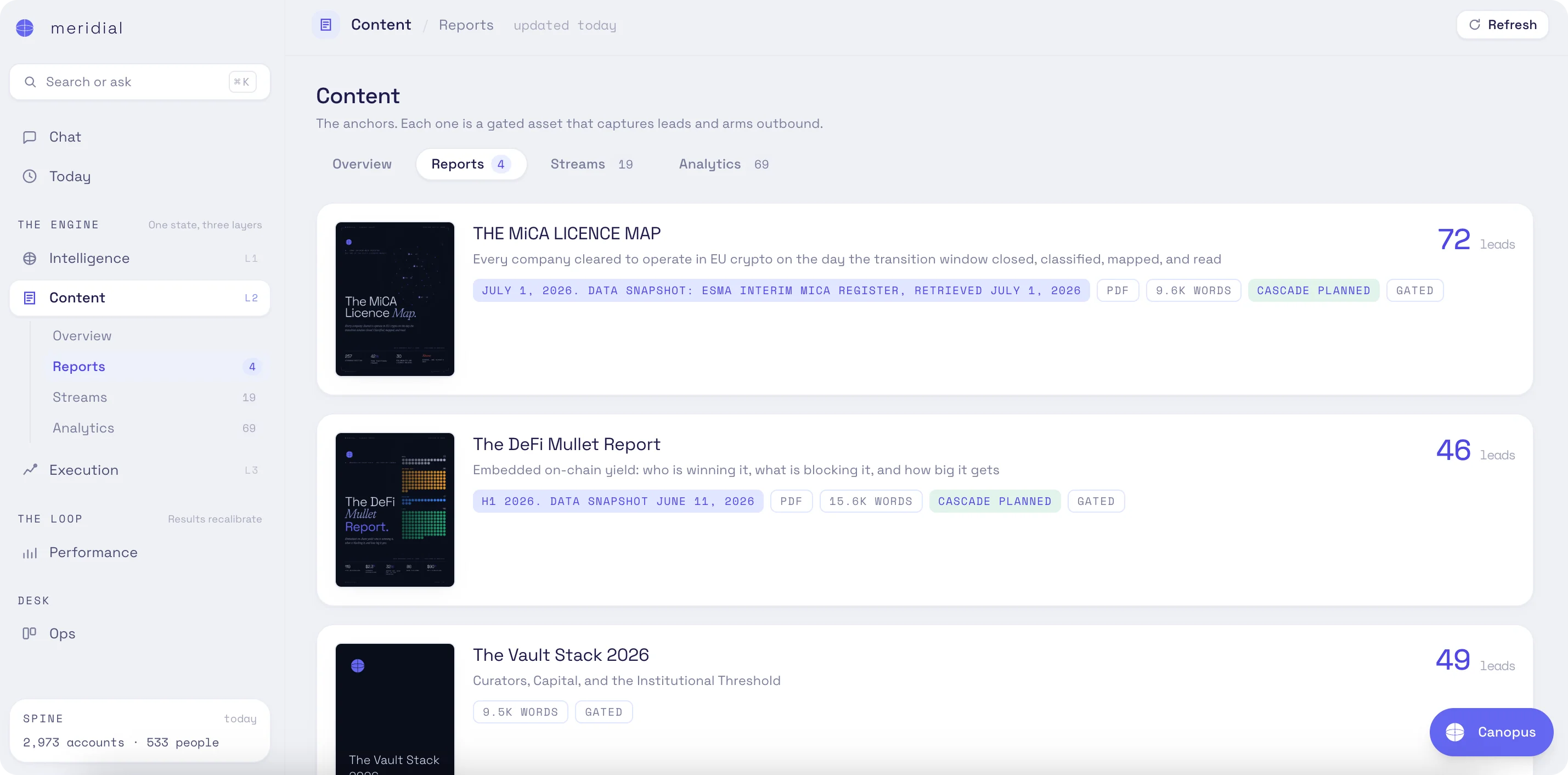
The cockpit · content / reports
Nothing ships to build awareness alone.
Every piece is instrumented before it is published. If a piece cannot do all three of these, it does not get produced.
The source your market cites.
Published under your brand, research-first, attributed, and structurally clean for machine parsing, so answer engines quote it when a buyer asks the question it answers.
Built for the queries your buyers actually type
Attention becomes a named person.
Every piece is instrumented before it publishes. Downloads, social engagers, website visitors and forms all fire enrichment and scoring within minutes, which is what turns a reader into a row on the spine with a follow-up attached.
Nothing that engages goes unidentified
A reason for outbound to land.
The same asset attaches to sequences as value-first material. A message carrying a relevant market map gets read. A message that only pitches gets deleted.
One asset, working three channels
The model is a commodity. The input is the edge.
More than half of long-form posts on LinkedIn in 2025 were likely machine-written, which is exactly why generic output stopped working: a blank prompt returns the statistical average of everything ever written on a topic, and answer engines are trained to skip it. Everyone runs the same models. What decides the output is everything assembled around them. We wrote the long version of this argument here.
The context layer
Company context, customer insight, positioning, the topic and AI-question maps. Built once, versioned, and loaded into every brief.
Your own expertise
Documentation, product detail, research, recorded talks, webinars, sales calls, plus direct interviews with your team on the narratives that matter in your market.
The intelligence read
Feed four from the layer above: which anchors, which questions, which pains, aimed at buyers the map has actually found.
Brief
Angle, audience, the questions it must answer, the artifacts it runs against.
Research
Primary sources only, every load-bearing number pulled and dated.
Draft
A specialised step per format, never one overloaded prompt.
Fact-check
Every claim, number, name and quote traced back to source and to the live web.
Voice pass
Run against the voice guide until it reads like your firm, not like a model.
Human editor
A person approves, or it does not ship. This step is never automated away.
The return leg. What each piece earned, downloads, engagement, the queries it got cited on, flows back into the context layer. The engine gets better at your market with every piece it ships.
The thinking happens once. Distribution multiplies.
Content is built top down, never bottom up. Each cycle starts with one substantial anchor built on your expertise and aimed at your market, then cascades into every smaller format the work can sustain: roughly 12 to 18 pieces over four to six weeks, each one linking back toward the gated anchor.
The anchor
One substantial gated asset per cycle: a buyer-universe map, a segment report, or a deep analysis built on a register from the layer above. It is the only thing a prospect trades an email for, and the only thing worth attaching to a cold sequence.
The cascade
Article, LinkedIn post, X thread, snapshots, data visualisations, sequence collateral, newsletter cuts, sales one-pagers. The research is already done, so the cascade is extraction and reformatting rather than new work.
The gate
Every anchor sits behind a form on your own site, never a native social viewer. The form is what triggers enrichment and scoring within minutes, which is what makes the asset worth producing.
Where the work actually goes.
Producing it is half the job. The other half is putting it where the right people will meet it, on three surfaces at once.
LinkedIn and X, on a cadence.
Native posts and threads under your brand and your operators' names, written for dwell time rather than post count, because both feeds now reward depth and suppress recycled AI patterns.
AEO-first, because search moved.
Every substantial piece gets a permanent, crawlable URL built to be quoted: research-backed, attributed, comprehensive rather than fragmented, and structurally clean for machine parsing. Social posts evaporate; the library compounds.
Put in front of the exact right people.
The strongest distribution channel is not a feed. It is the execution layer putting the right report in front of the named person whose market it maps, with the reason they should care. That is the next section.
This is what an anchor looks like when it ships.
Meridial runs the engine on itself, so the content layer's output is public. These are the gated anchors the system produced, each one built on a register from the layer above it, and each one still capturing leads and arming sequences months after publication.
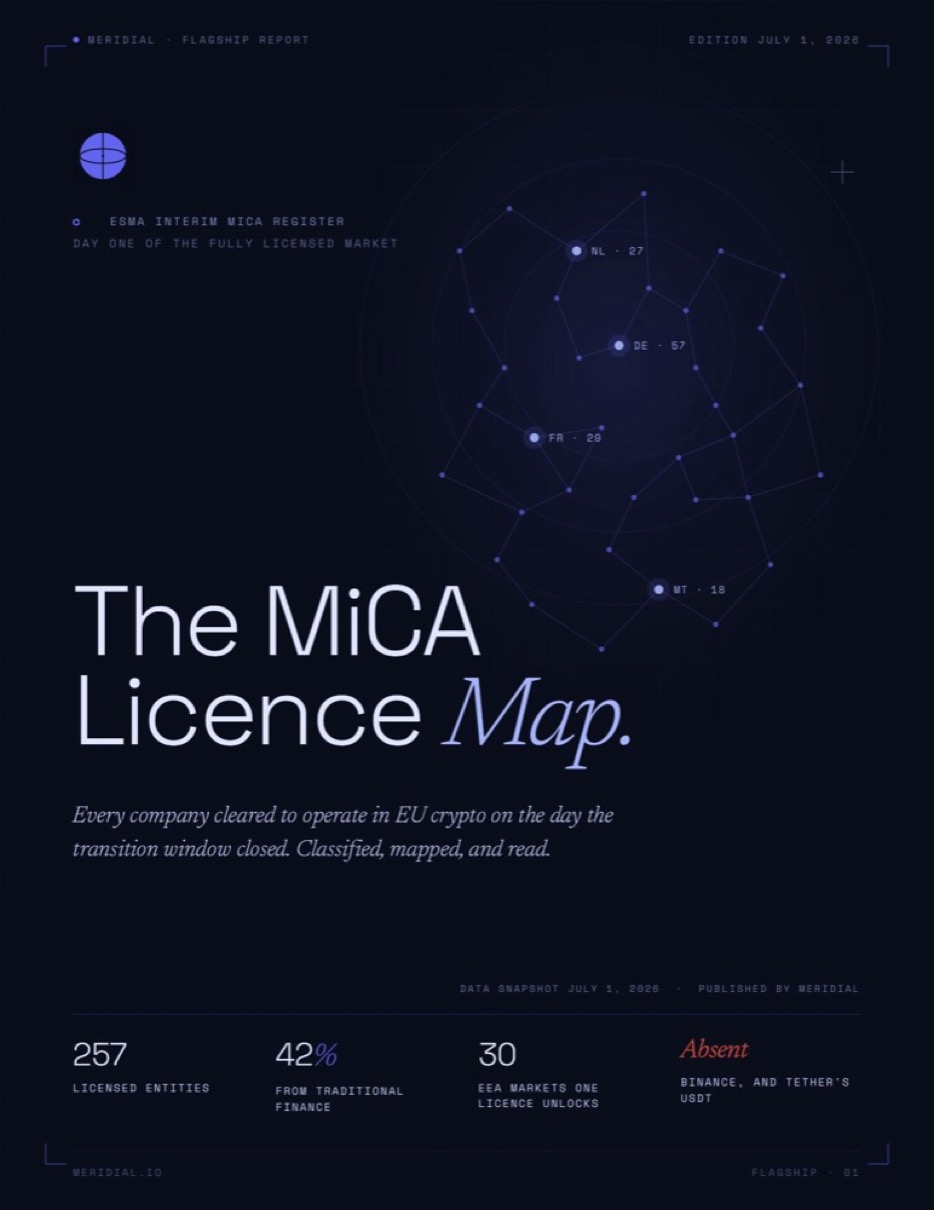
output · Layer 2, directed by Layer 1
257 licensed entities on the ESMA register, 42% from traditional finance.
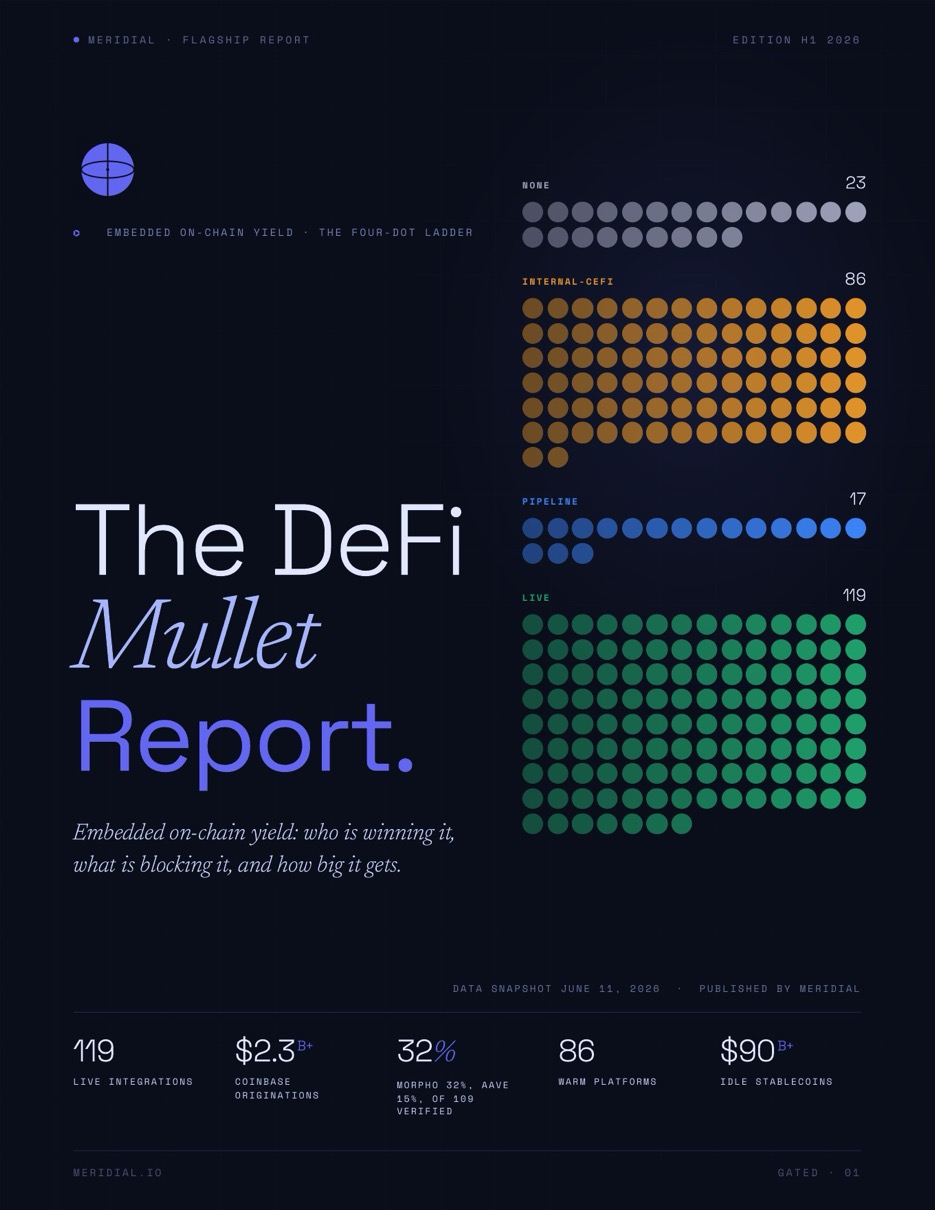
output · Layer 2, directed by Layer 1
119 live integrations wiring regulated front-ends to DeFi lending.

output · Layer 2, directed by Layer 1
70-plus institutional entries against a 22% Bitcoin drawdown.
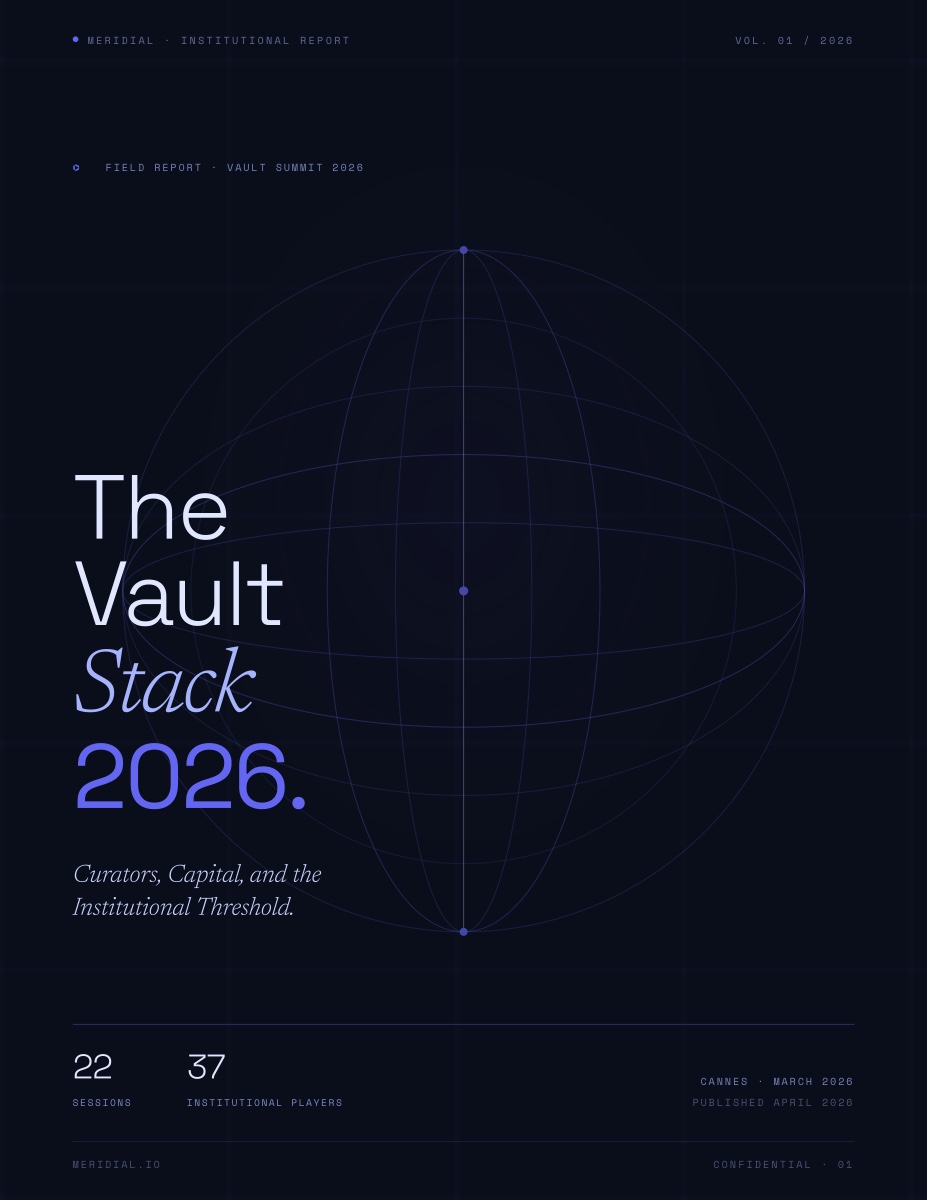
output · Layer 2, directed by Layer 1
22 sessions, 37 institutional players, the four-tier vault stack.